
For decades, technology followed a fairly predictable path.
Computers became faster. Phones became smarter. Storage became cheaper. Internet connections became faster. Software gained more features.
We were essentially doing the same things with increasingly powerful machines.
But something different is happening now.
Technology isn't simply getting better.
The way we interact with technology is changing.
And the biggest reason is artificial intelligence.
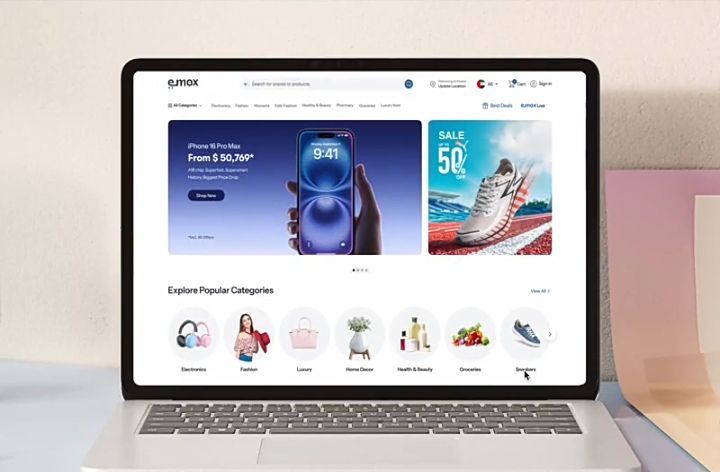
[IMAGE PLACEHOLDER — Human interacting with an AI-powered computer or futuristic technology]
We're Moving From Apps to Intent
Think about how you use your phone.
Want to send a message? Open an app.
Want directions? Open another.
Want to buy something? Open a shopping app.
Want information? Open a browser or search engine.
For decades, we adapted ourselves to software. We learned which buttons to press, which menus to open and which applications to use.
AI is beginning to reverse that relationship.
Instead of telling a computer how to do something, you can increasingly tell it what you want.
"Compare these phones."
"Plan my trip."
"Summarise this document."
"Build me a website."
The technology can increasingly handle the steps in between.
That's a much bigger change than simply having a smarter chatbot.
The App Era May Be Changing
The smartphone isn't disappearing anytime soon, and neither are apps.
But the way we use them could change dramatically.
Imagine asking an AI assistant to plan your trip instead of opening a travel app, searching through hotels, checking transport separately and building an itinerary yourself.
The apps may still be doing the work behind the scenes.
You simply don't have to interact with each one individually.
The interface becomes less important. Your intention becomes more important.

Software Is Becoming Easier to Build
Another major shift is happening quietly.
Software development used to require significant technical expertise, time and money. Building a serious product could require programmers, designers, testers and entire development teams.
AI is lowering that barrier.
Developers can use AI to write, explain, debug and improve code. Someone with limited programming experience can potentially turn an idea into a working prototype much faster than before.
That doesn't mean programmers are becoming irrelevant.
It means software itself is becoming less scarce.
And when something becomes easier to produce, other things become more valuable.
Trust.
Distribution.
Brand.
Data.
Infrastructure.
Execution.
The challenge may no longer be simply building software.
It may be building something people actually want.
Even Hardware Is Changing
For years, buying technology meant comparing specifications.
How much RAM? How much storage? How fast is the processor? How good is the camera?
Those things still matter.
But we're increasingly asking another question:
What can this device actually do for me?
Phones, laptops and other devices are being designed with dedicated AI capabilities, allowing them to perform increasingly intelligent tasks.
We're moving from devices that simply execute instructions toward devices that can increasingly understand, predict and assist.
[IMAGE PLACEHOLDER — Modern smartphone or laptop with AI processing visualisation]
The Internet Is Becoming More Active
The internet originally gave us access to information.
Then it became a place where we could communicate, shop, work and create.
Now it is increasingly becoming something that can act on our behalf.
Instead of simply searching for information, AI can help interpret it.
Instead of merely showing you products, it can compare them.
Instead of explaining how to complete a task, it can increasingly help perform it.
That could change search, online shopping, customer service, business software and countless other industries.
And Then There Is Work
This may be the most disruptive part.
AI is increasingly entering areas once considered distinctly human: writing, coding, research, analysis, design and translation.
That doesn't necessarily mean humans won't have jobs.
It means the value of certain skills will change.
Someone who knows how to work effectively with AI could potentially accomplish far more than someone doing the same work entirely manually.
The ability to ask the right questions, make good decisions and direct technology effectively may become just as important as knowing how to perform the task itself.

So, What Happens Next?
The biggest mistake we can make is imagining the future as simply a faster version of today.
A better phone.
A faster laptop.
A smarter television.
Technology revolutions rarely work that way.
The internet didn't create a better newspaper.
The smartphone didn't create a better telephone.They changed what those technologies meant.
AI could do something similar to computing itself.
For most of our history with computers, we learned how to use machines.
Increasingly, machines are learning how to understand us.
And that may be the beginning of a very different technological era.
Everything you know about tech isn't becoming obsolete. But the rules are changing.
And the people who understand those changes early may be the ones best positioned to take advantage of what comes next.
2 Comments
This is a test comment to see how the comments and replies section works on this system and how exactly responses are nested inside those replies or comments.
You can add edit or delete anything after observation
Please check my site: spam:
https://www.beting.com
This is a good one but that's not the case as well thought out of stock should I buy now button to the right of the post office open today 11 00 am at the bottom of the post office open today
Tedter
Okay replied here